
WELCOME BONUS 300%
UP TO €2000 + 100
FREE SPINS
UP TO €2000 + 100
FREE SPINS
Home → Blackjack
Blackjack at Game Bc: Variants, Rules and Payouts
Card Counting at Shuffle Master Table: why it fails
The Shuffle Master system prevents card counting from influencing the outcome of blackjack hands played on mobile devices. This technology shuffles all cards after every single round, effectively eliminating any potential advantage gained through tracking the deck composition.
Traditional counting methods rely on a persistent deck structure to predict favorable cards for the player's next bet. Since each hand is dealt from a freshly shuffled shoe, the true count remains constant and provides no predictive value for subsequent decisions.
This design ensures that the house edge remains fixed at the stated percentage regardless of player skill or strategy adjustments. Mobile players cannot use advanced techniques to lower the casino's mathematical advantage during their gaming sessions.
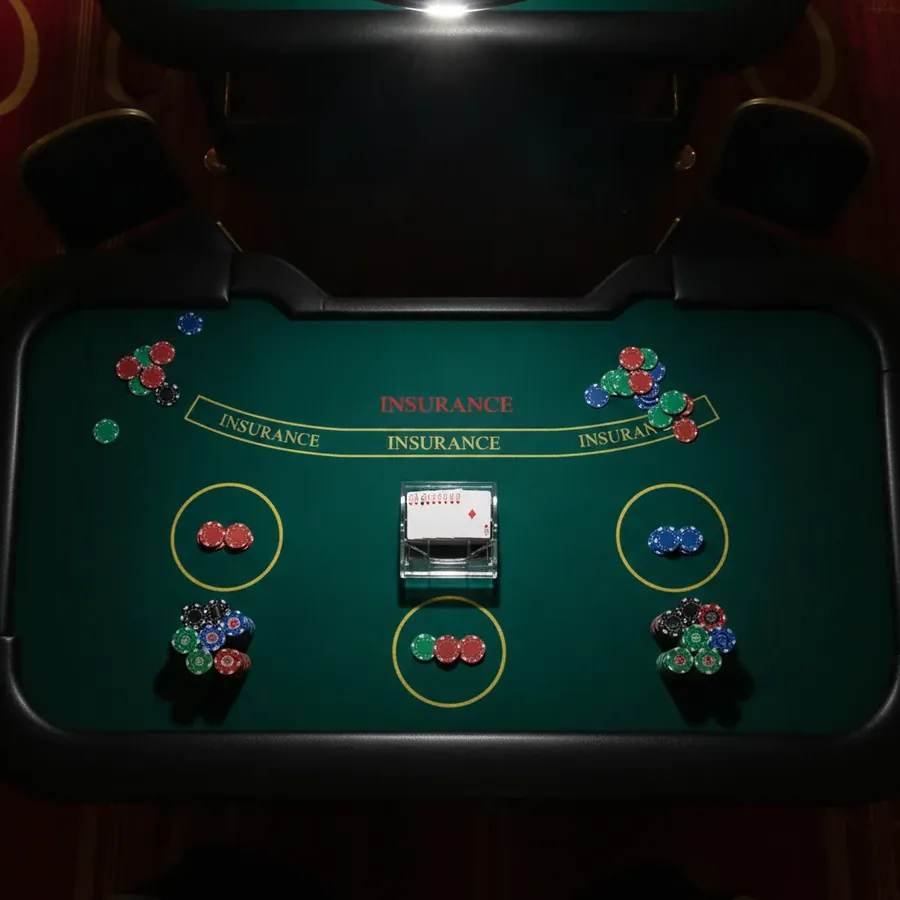
Statistics display saves the last 100 rounds
The game interface tracks and displays the results of the previous 100 rounds for immediate reference by mobile users. This feature allows players to review recent outcomes without needing to navigate away from the active betting screen.
Accessing historical data helps users analyze short-term variance in their gameplay performance on smartphones. The displayed statistics provide transparency regarding the randomness of the dealer's actions over a significant sample size.
Reviewing these past events does not influence future card distributions due to the independent nature of each hand. Players can verify the fairness of the game engine while maintaining focus on their current strategic decisions.
16 vs 10 played incorrectly: most common error
Players often choose to hit when holding a hard 16 against a dealer's ten, despite basic strategy recommending surrender or standing depending on specific rules. This deviation significantly increases the expected loss compared to following the optimal mathematical path for this high-risk scenario.
Correct play requires strict adherence to the base strategy chart provided within the game rules or external reliable sources. Deviating from this chart based on intuition leads to a higher long-term cost for the mobile gambler.
The error rate spikes among casual players who ignore the statistical probability of busting with an additional card. Adhering to the prescribed move minimizes the house edge even in unfavorable starting positions.
What Percentage Does Blackjack Count Towards Bonus?
Blackjack contributes only 10% towards the wagering requirements for the 300% welcome bonus up to €2,000 plus 100 free spins offered by the casino. This low contribution rate means players must wager substantially more than they would with slots to clear the bonus funds.
For example, a €100 bet on blackjack counts as €10 towards the turnover target, whereas the same amount in slots would count fully. This discrepancy makes table games less efficient for clearing promotional credits compared to high-contribution slot titles.
Mobile users should calculate their required volume carefully to avoid exceeding time limits or other restrictions attached to the offer. Understanding this 10% factor is crucial for managing bankroll expectations while attempting to unlock withdrawable cash.
Seat change at the Live Table in 20 seconds
The live dealer platform allows players to switch seats at Infinite Blackjack or Lightning Blackjack tables within approximately 20 seconds via mobile interface. This quick transition enables users to find available spots without missing ongoing action or significant multipliers.
Infinite Blackjack supports unlimited players, making seat availability generally high, but quantum features in Quantum Blackjack Plus Live may require specific positioning for optimal side bet placement. Rapid seat changes help users adapt to changing table dynamics and multiplier opportunities.
This functionality enhances the mobile experience by reducing downtime between hands and allowing flexible management of multiple accounts or strategies. Users can seamlessly move between tables to capitalize on different RTP variations or stake limits ranging from 1 to 5,000 EUR.
Blackjack variants at a glance
| Variant | Payout | House edge | Rule | Bet range |
|---|---|---|---|---|
| Blackjack Split / Double / H17 – Regel-Effekte | n.a. (Regel-Modifikatoren) | H17 +0.22 Prozentpunkte; RSA −0.08 Prozentpunkte; DAS −0.14 Prozentpunkte | Dealer Hits Soft 17 verschlechtert RTP um 0.22 Prozentpunkte; Resplit Aces verbessert um 0.08 Prozentpunkte; Double After Split verbessert um ca. 0.14 Prozentpunkte; 6 Decks statt 8 – ca. 0.02 Prozentpunkte. | Double – Einsatz ×2 mit einer Karte; Split – bis 4 Hände; Ass-Split meist mit einer Karte. |
| Blackjack Auszahlung 6:5 statt 3:2 (6 Decks) | 98.15% | 1.85% | Ersatz von 3:2 durch 6:5 fügt exakt +1.39 Prozentpunkte zum Vorteil des Casinos hinzu – stärker als jede andere Regeländerung. Bei $10 Einsatz zahlt Blackjack $12 statt $15. | Blackjack 6:5, Gewinn 1:1 |
| Blackjack 6 Decks, S17, DAS, DOA, Auszahlung 3:2, Basisstrategie | 99.54% | 0.46% | Dealer steht auf Soft 17; Verdopplung auf jeder Zweierkarte; Verdopplung nach Split erlaubt; keine Aufgabe. Basisstrategie ist für diesen Wert zwingend | Blackjack 3:2, normaler Gewinn 1:1, Insurance 2:1 |
| Blackjack Surrender (Late Surrender) – Regel-Effekt | n.a. (Regel-Modifikator) | −0.08 Prozentpunkte | Spieler gibt Hand nach Dealer-Blackjack-Prüfung auf, verliert die Hälfte des Einsatzes. Verbessert RTP um ca. 0.08 Prozentpunkte. Early Surrender ist wesentlich wertvoller (bis −0.6 Prozentpunkte), aber extrem selten. | Rückzahlung 50% des Einsatzes |
| Blackjack Insurance / Versicherung (6–8 Decks) | 92.53% | 7.47% | Separate Nebenwette bis 50% der Hauptwette, wenn der Dealer ein Ass hat. Basisstrategie schreibt IMMER Ablehnung vor (außer Karten zählen bei True Count ≥ +3). Bei einem Deck Vorteil ≈ 5.88% | Insurance 2:1 |
| Blackjack Liberal Vegas Strip (liberale Regeln, 3:2) | 99.72% | 0.28% | Günstigste Regelkombination: S17 + DAS + Resplit + Late Surrender. Standardabweichung 1,15 | Blackjack 3:2, Gewinn 1:1 |
Highroller from 500 EUR per hand
The Infinite Blackjack table at Game Bc supports betting limits ranging from 1 to 5,000 EUR per round. This upper threshold allows high-stakes players to wager substantial sums while accessing unlimited seating arrangements. The limit is double the maximum stake of the Lightning variant, which caps at 2,500 EUR. Players seeking higher stakes must verify if their bankroll can sustain variance at this level.
Lightning Blackjack offers a lower entry point with bets starting at 1 EUR and ending at 2,500 EUR. This range accommodates moderate highrollers who prefer multipliers over pure volume. The table features unlimited players sharing a single dealer shoe. Consequently, action is faster than at traditional tables with fixed seat counts.
Quantum Blackjack Plus Live matches the Infinite variant's ceiling by allowing wagers up to 5,000 EUR. Playtech provides quantum multipliers up to 1,000x for specific three-card combinations totaling 21 points. These multipliers apply to winning hands within the standard betting range. The game does not offer unlimited seats like Evolution's product but maintains high volatility potential.
Blackjack Payout 3:2 Explained in Detail
A standard Blackjack payout of 3:2 returns 150 EUR on a 100 EUR winning bet. This ratio applies to classic games using liberal rules like the Vegas Strip variant. The house edge for this configuration sits at 0.28 percent with optimal play. It represents the most favorable return structure available in digital blackjack.
Tables offering a 6:5 payout return only 120 EUR on the same 100 EUR bet. This reduction adds exactly 1.39 percentage points to the house advantage compared to the 3:2 version. A game with six decks and 6:5 payouts has a house edge of 1.85 percent. The difference significantly impacts long-term bankroll preservation for regular players.
Insurance bets pay 2:1 when the dealer shows an Ace, separate from the main hand outcome. This side bet carries a house edge of 7.47 percent in six to eight deck games. Basic strategy dictates always declining insurance unless counting cards reveals a true count of +3 or higher. Accepting it reduces overall expected value regardless of the main hand payout ratio.
Unlimited seats via a split dealer hand
Infinite Blackjack utilizes a split dealer hand mechanism to accommodate an unlimited number of participants. Each player receives cards independently while sharing a single continuous shuffle shoe. Evolution Gaming developed this format to eliminate waiting times between rounds. The system processes bets simultaneously without physical chip exchanges.
Lightning Blackjack also permits unlimited players at its tables despite having a lower maximum bet cap. Multipliers are applied to individual winning hands after the deal concludes. The software calculates outcomes based on each player's specific card combination against the dealer. No physical seating constraints exist for online participants joining the stream.
Quantum Blackjack Plus Live focuses on multiplier mechanics rather than seat capacity expansion. While it lacks the infinite seat feature, it supports high-volume betting up to 5,000 EUR. The game uses Playtech's proprietary engine to generate random quantum effects. Players compete against the dealer hand rather than other seated positions.
Ignored Basic Strategy Chart: 1 Percent Wasted
Adhering to basic strategy yields a house edge of 0.46 percent for six-deck S17 games. Deviating from this chart typically increases the casino advantage by approximately one percentage point. The theoretical return drops from 99.54 percent to roughly 98.54 percent. Strategic errors compound rapidly over thousands of hands played at the table.
Resplitting Aces improves the RTP by 0.08 percentage points compared to restricted splitting rules. Doubling after split adds another 0.14 percentage points to player favorability. Late surrender reduces the house edge by 0.08 percentage points. Ignoring these specific rule adjustments forces players into suboptimal decision-making patterns.
Dealer hitting soft 17 worsens the RTP by 0.22 percentage points compared to standing rules. Using six decks instead of eight changes the edge by only 0.02 percentage points. The most significant factor remains strict adherence to the mathematical strategy chart. Failure to follow prescribed moves effectively wastes potential returns every session.
Bet two percent of bankroll per hand
Wagering two percent of a total bankroll per hand provides a buffer against normal variance. For a 1,000 EUR bankroll, this translates to a 20 EUR bet size. At Infinite Blackjack, where minimums start at 1 EUR, this strategy remains feasible. It prevents rapid depletion during losing streaks common in high-variance environments.
The welcome bonus offers 300 percent up to 2,000 EUR plus 100 free spins. Table games contribute only 10 percent toward wagering requirements, unlike slots at 100 percent. A 20 EUR bet contributes 2 EUR to the turnover target per hand. Players must wager significantly more on tables to clear bonus funds efficiently.
Blackjack Surrender allows players to forfeit half their bet after checking for dealer blackjack. This rule reduces the house edge by 0.08 percentage points in applicable variants. Using it correctly preserves capital during unfavorable starting hands. Consistent application aligns with conservative bankroll management principles.
What doesn't count as Blackjack after Split?
Resplit Aces (RSA) allows players to split aces again, improving the RTP by 0.08 percentage points compared to games that prohibit this action. The rule change modifies the house edge by −0.08 percent, but it is distinct from Double After Split (DAS), which improves the RTP by approximately 0.14 percentage points. Players who frequently receive pairs of aces benefit more from DAS, as splitting twice offers fewer strategic opportunities than doubling on multiple hands.
Double After Split permits doubling down on any hand created through a split, a feature that reduces the house edge by roughly 0.14 percentage points in six-deck games. This flexibility contrasts with Resplit Aces, which only applies to aces and offers a smaller 0.08 percentage point improvement to the player's theoretical return. Both rules enhance value, but DAS applies to all ranks, making it generally more significant for average play than the ace-specific RSA modification.
Insurance payouts offer 2:1 odds when the dealer shows an ace, yet they remain separate side bets excluded from main game strategy calculations. The house edge for insurance stands at 7.47%, significantly higher than the base game, meaning accepting it without card counting erodes long-term profitability. This high cost makes insurance a poor choice for mobile players relying on basic strategy, as it does not contribute to the optimal decision-making process for the primary hand.
One Deck vs Eight Decks in House Edge
Blackjack with one deck and classic rules featuring 3:2 payouts delivers a low house edge of 0.15% and an RTP of 99.85%. This single-deck format provides approximately −0.48 percentage points advantage compared to eight-deck variants, assuming identical liberal rules like S17 and DAS. The reduced number of cards lowers the casino's mathematical hold, making it one of the most favorable configurations for skilled players.
Six-deck games often replace the standard 3:2 payout with 6:5, which adds exactly +1.39 percentage points to the house edge, resulting in a 1.85% disadvantage for the player. This specific rule change negates the natural advantage gained from having fewer decks, turning a potentially fair game into one with a steep 98.15% RTP. Mobile users must verify the payout structure, as the deck count becomes irrelevant if the unfavorable 6:5 ratio is applied to the blackjack outcome.
The Liberal Vegas Strip variant uses six or eight decks but maintains strict 3:2 payouts and liberal rules like late surrender, achieving a house edge of just 0.28%. This configuration balances deck density with player-friendly mechanics, offering a much better return than the 6:5 six-deck version despite the similar deck count. Players should prioritize these liberal rule sets over single-deck games that impose restrictive 6:5 payouts to maximize their expected value per hour.
Register Late Surrender correctly in three steps
Late Surrender allows players to forfeit half their bet after the dealer checks for blackjack, reducing the house edge by 0.08 percentage points. This rule applies only when the dealer does not have an ace or ten-value card showing initially, protecting the player from immediate loss in weak dealer upcards. The refund mechanism returns 50% of the original stake, providing a safety net that early surrender cannot match due to its stricter timing constraints.
Early Surrender is significantly more valuable, potentially reducing the house edge by up to −0.6 percentage points, but it is extremely rare in online casinos. Unlike late surrender, early surrender permits forfeiture before the dealer checks for blackjack, offering greater protection against hidden ten-value cards. Most mobile platforms lack this feature, forcing players to rely on the less advantageous late surrender option available in standard six-deck tables.
Mobile players should identify tables offering late surrender to mitigate losses on hands like 15 against a dealer 10, where the expected loss exceeds the 50% surrender penalty. The rule acts as a modifier rather than a standalone game, so it must be combined with other favorable conditions like S17 and DAS to achieve optimal RTP. Without late surrender, the house edge increases, making the game less profitable for those adhering strictly to basic strategy charts.
Which hands are excluded from Surrender?
Blackjack hands paying 3:2 are never eligible for surrender, as the player has already secured a winning outcome that exceeds the potential loss from forfeiting the bet. The game logic automatically awards the 1.5x multiplier upon seeing an ace or ten-value dealer card, rendering the surrender option redundant and mathematically unsound. Players cannot choose to lose half their wager when they have already won the maximum payout for the round.
Hands totaling 21 formed by three or more cards are also excluded from surrender options, as they represent a non-blackjack win that cannot be improved upon. Since the player cannot draw additional cards, the surrender mechanic offers no strategic benefit over simply standing on the strong total. The exclusion ensures that the surrender rule is reserved for marginal hands where the probability of losing exceeds the fixed 50% penalty cost.
Dealer busts do not trigger surrender eligibility because the player wins immediately upon the dealer drawing past 21, eliminating any risk of further loss. The game resolves instantly once the dealer completes their hand, leaving no window for the player to exercise a surrender option. This automatic resolution highlights why surrender is strictly limited to pre-resolution decisions made while the dealer still holds an active hand.
Which rule variants does the software show?
Lightning Blackjack by Evolution features multipliers up to 25x on winning hands, operating within a betting range of 1 to 2,500 EUR per round. The game maintains an RTP of 99.56%, slightly higher than standard variants, due to the added volatility from the lightning strike mechanics. Unrestricted player seats allow mobile users to join the stream simultaneously, though the side bet focus shifts attention away from pure basic strategy execution.
Infinite Blackjack offers unlimited seating and a wider betting limit of 1 to 5,000 EUR, accommodating high-stakes mobile players seeking larger exposure. The table includes four side bets such as Any Pair and 21+3, which operate independently of the main hand and carry their own distinct house edges. Despite the added complexity, the core game retains a robust 99.47% RTP, ensuring the primary blackjack action remains statistically favorable for disciplined players.
Quantum Blackjack Plus by Playtech introduces multipliers up to 1,000x on specific three-card combinations totaling 21 points, targeting extreme variance seekers. With an RTP of 99.57% under optimal strategy, the game rewards precise card selection while allowing bets between 1 and 5,000 EUR. The quantum theme overlays standard rules with digital enhancements, but the underlying mathematics still require adherence to basic strategy to preserve the theoretical return rate.
Contact
Live - online chat
Banking


Providers







Bc Game 2026